

Good cage-sum solving is not about repeatedly adding numbers until something fits. The goal is to shrink the possible combinations, then use row and column uniqueness to decide where those digits can go.
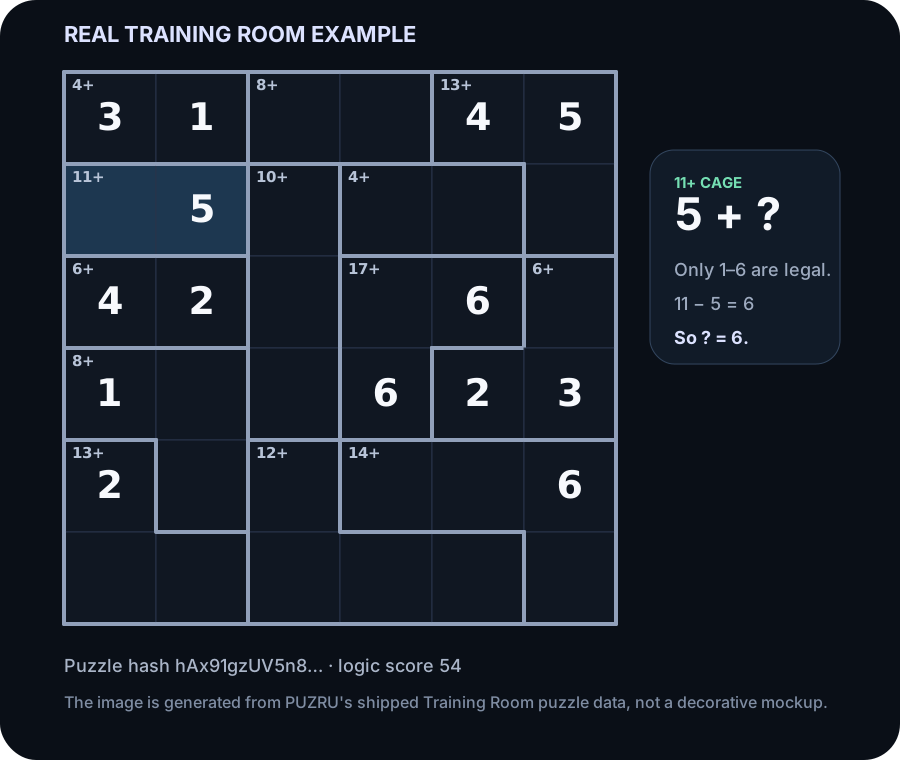
1. Find the most constrained cage
A two-cell cage usually has fewer combinations than a four-cell cage. Extreme totals also reduce possibilities. In a 1–6 puzzle, a very high total requires several high digits; a very low total requires several low digits.
2. Separate combinations from arrangements
A cage may allow the digits {1,5}, but that does not mean both orders are possible. If one cell's row already contains 5, the arrangement becomes forced.
3. Use row completion aggressively
When a row is missing only two digits, compare those missing values with the cages crossing the row. One cage restriction can decide both cells at once.
4. Re-scan after every committed value
Each placement changes a row, a column and a cage simultaneously. Strong solvers deliberately re-check all three structures instead of continuing in one direction for too long.
5. Treat guessing as a warning sign
Production PUZRU puzzles are quality-gated for a logical no-guess path. If you feel forced to make a random choice, look for a constraint you have not combined yet.
Put the idea into practice
The fastest way to understand the interaction between row, column and cage constraints is to solve a board. Start in the 200-puzzle progressive Training Room, then enter the live world whenever you are ready to race for Discoverer.